Blog: What can we learn from Finland for UK heat networks?
28.1.2026 – A visit to Fortum’s Espoo district heating network – inspiration for the future potential of the UK market.
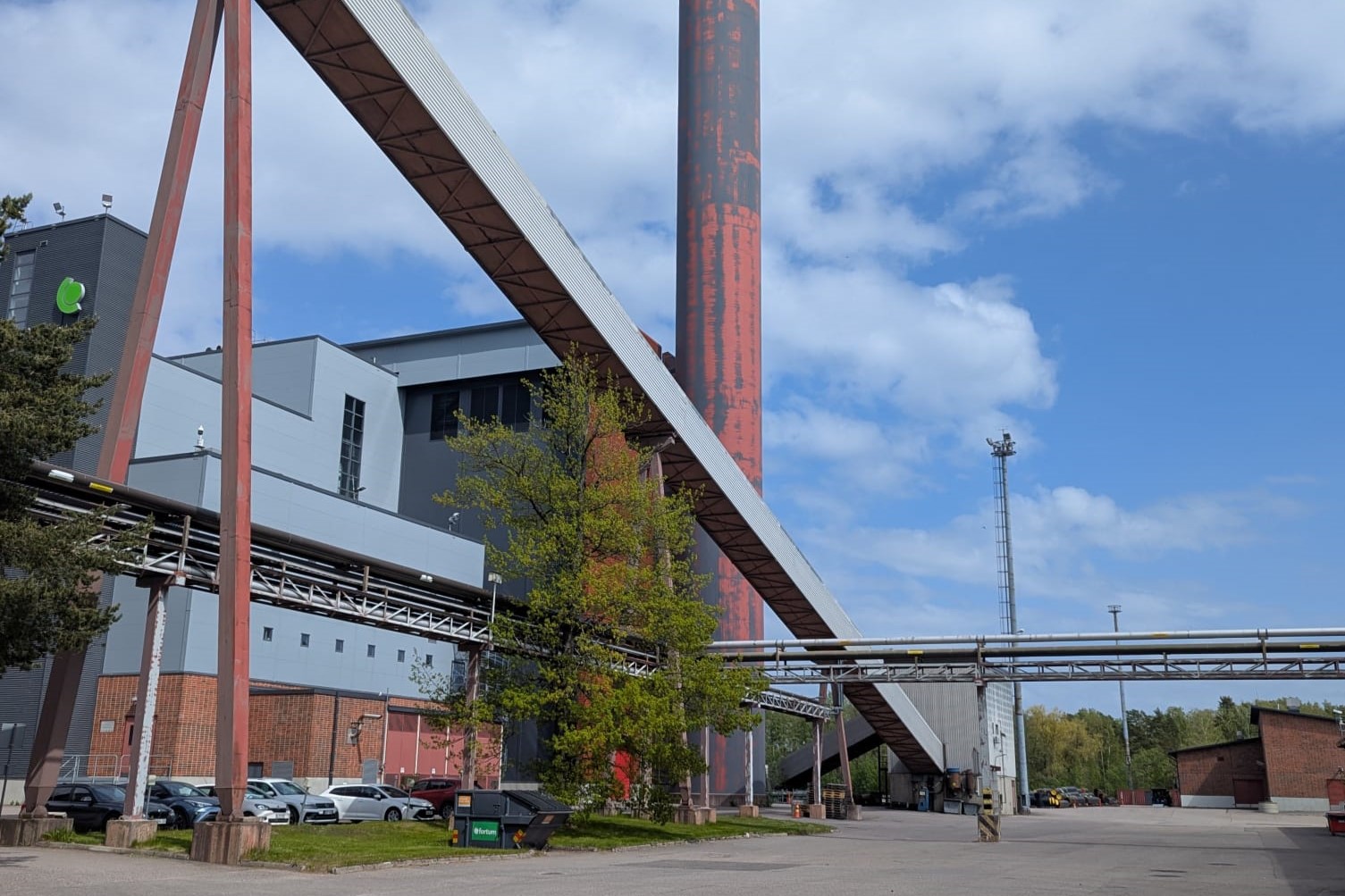
During a visit to the Granlund Group headquarters earlier this year, the UK team had the opportunity to tour Fortum’s Espoo district heating network. Espoo Clean Heat is a utility-scale heat network for Finland’s second largest city, comprising of over 900km of pipework and supplying heat to ~ 250,000 people. Operational since 1953, the growth, development, and re-invention of the Espoo scheme provides a best practice example of the transformative potential for district heat systems.
Wandering the grounds of the Suomenoja energy centre, it was easy to get inspired about the future potential of the UK market. Reflecting on the visit, I wanted to discuss how it demonstrates some of the benefits of the heat network solution we don’t always place front of mind.
An often underappreciated aspect of heat networks is their modularity.
A flexible infrastructure asset
An often underappreciated aspect of heat networks is their modularity. Hot water is a flexible energy vector – it’s a simple interface with almost any heat source – and this allows it to be largely technology-agnostic when it comes to generation. This means transitioning to low-carbon heating is significantly easier with a network in place – you can plug and play your low carbon heat sources into the existing hot water infrastructure.
Espoo presents a prime example of this. In the 1970s, the coal-fired Suomenoja Combined Heat and Power (CHP) plant became one of the primary contributors of heat, with a thermal supply of 160 MWth. It remained operational until 2024 when it was decommissioned as part of Fortum’s ongoing efforts to decarbonise heat supply.
Among the low carbon heat sources replacing this the fossil fuel generation are:
- 67 MW (!) of water source heat pumps utilising a combination of seawater & wastewater
- 49 MW of biomass heating
- 10 MW of air source heat pumps
- Over 100 MW of electric boilers
With an additional 100 MW of data centre heat recovery on the way.
The network still maintains significant capacity of gas-fired heat supply , but the scale and pace of the transition is impressive – almost all of this plant has been installed in the last 5 years. When Fortum states their 2030 carbon neutral ambition for the Espoo network, it feels eminently achievable.
Once a heat network is established, it becomes a flexible infrastructure asset which can respond to future requirements and market movements. Whether that’s net zero for 2050, a data driven future, or an evolving electricity market, the heat networks we build today are future-proofed by the flexibility of hot water as a vector.
Once a heat network is established, it becomes a flexible infrastructure asset which can respond to future requirements and market movements.
Scale and resilience
As heat networks increase in scale, the resilience of the system also rises. When operating with smaller-scale networks, we rely more heavily on thermal storage to allow effective utilisation of heat sources and to ensure continuity of supply.
In a utility-scale deployment like Espoo Clean Heat, the network itself becomes an enormous thermal battery – raising the flow temperature a couple of degrees allows for a vast amount of energy to be stored within the system. Continuity of supply is assured not only by the wide range of distributed heat sources, but by the enormous thermal inertia of the tons of hot water flowing through the underground network.
Electricity in Finland is overall among the cheapest in Europe.
Flexibility in the energy markets
There’s no denying that the impressive rate of decarbonisation at Espoo is at least partially enabled by wider market forces. For non-domestic consumers (like heat network operators) Electricity in Finland is overall among the cheapest in Europe, due largely to the effective deployment of nuclear and renewables.
The characteristics of these technologies mean that electricity prices, while low on average, can be highly variable. Nuclear is very difficult to turn down, and wind very difficult to predict. This makes the Finnish electricity prices among the most volatile in Europe, with the most hours of negative or zero pricing in 2024.
The introduction of electrical heat generation to the Espoo network allows them to respond to this variable power market efficiently. The wide range of supply technologies allow the most economic heat source at any given moment to be deployed, with the network scale providing sufficient resilience to weather short-term spikes in fuel prices. The negative pricing periods mean there are time when Fortum is paid to generate heat.
It’s clear that in the UK energy markets, we’ll need to identify smarter tariffs/solutions to support heat networks through the early stages of development and deployment. If we can chart a way through the early years of capital outlay, we can start to realise the enormous benefits of a new utility – one which makes the most of a flexible infrastructure asset which only becomes more resilient as it scales.
More information

Alec Sims
Read more our blogs and news
Granlund’s strong growth continued – 200 new employees during the year
11.02.2026 – Granlund achieved nearly 19% growth despite the continued challenging market conditions in the real estate and construction sector. Several acquisitions…
Blog: What can we learn from Finland for UK heat networks?
28.01.2026 – A visit to Fortum’s Espoo district heating network – inspiration for the future potential of the UK market.
Blog: How might zonal pricing influence heat network development in the UK?
14.05.2025 – As the UK considers shifting to zonal electricity pricing, the implications for heat network development could be far-reaching.

Greenfield Nordic is now Granlund UK
13.02.2025 – Greenfield Nordic became part of Granlund in 2018. Changing the name marks a natural step towards further alignment with the…
Granlund continued its strong growth
12.02.2025 – In 2024, Granlund performed well in the challenging real estate and construction market. Data center, renovation, software and public sector…

Granlund UK strengthens its team with new appointments
07.02.2025 – Granlund UK welcomes two new experts to the growing team: Alec Sims and David Forbes. Their experience in the energy…

Granlund brings in international expertise to strengthen its Board of Directors
04.12.2024 – The goal of the new multidisciplinary Board of Directors is to guide the company towards stronger growth and internationalisation.
For Granlund, the past year looks good both in terms of net sales, employee and customer satisfaction
01.11.2024 – In early November, Granlund’s year looks like a success, and Pekka Metsi, CEO, believes that, for the construction industry, the…

Granlund designs specialised AI data centers for Nordic climate
29.10.2024 – The Artificial Intelligence boom creates a need for a new generation of data centers. An AI data center has unique…
Subscribe to our newsletter
Be among the first to hear about the latest news and trends relating to Granlund and the real estate and construction sectors.